How TimeWalker Fotona 4D Laser Facial Supports Skin Renewal in Encino, CA
Skin renewal is one of those phrases that gets used so often in aesthetics that it can start to sound vague. In practice, it means something very specific. The skin is constantly repairing, shedding, rebuilding collagen, and responding to stress from sunlight, heat, pollution, hormones, and age. Over time, that repair cycle slows. Texture gets rougher. Fine lines stop bouncing back. Pores look more obvious. The jawline softens. The change rarely happens all at once. Most people notice it in snapshots, a little more creasing around the mouth, makeup settling differently, or skin that looks tired even after a good night’s sleep.
That is where a treatment like the Fotona 4D Laser Facial, often referred to as TimeWalker, fits into the conversation. It is designed to stimulate renewal across different depths of the skin rather than relying on a single surface-level pass. For patients in Encino, CA, that matters. The combination of year-round sun exposure, dry heat, active outdoor living, and the simple reality of Southern California light can make even healthy skin show wear earlier and more visibly.
The appeal of this treatment is not that it promises a dramatic overnight transformation. It is that it addresses several signs of aging and skin fatigue in a way that can feel more balanced and more natural. For the right patient, that balance is often the goal.
Why skin renewal matters more than a quick fix
When patients ask for brighter, tighter, smoother skin, they are usually describing a collection of concerns rather than one isolated issue. A person may have mild laxity along the lower face, early lines around the lips, uneven texture on the cheeks, and a general loss of radiance. Treating only the surface can help for a while, but if the deeper support structure has weakened, the result may be limited or short-lived.
Skin renewal works best when a treatment respects that layered reality. The epidermis affects tone and texture. The dermis affects collagen and elasticity. The tissue inside the mouth and along the lower face also contributes to support, especially around the nasolabial folds and perioral area. TimeWalker uses that layered approach as its foundation.
This is one reason the Fotona 4D Laser Facial in Encino, CA has earned attention from patients who want improvement without the look or recovery profile of more aggressive procedures. Instead of trying to force one dramatic response from a single setting, it uses several modes to trigger gradual remodeling. In experienced hands, that can produce results that read as refreshed rather than obviously treated.
What TimeWalker Fotona 4D actually is
TimeWalker is a multi-step laser facial platform built around Fotona technology. The treatment uses complementary laser modes to target different tissue levels, including the inside of the mouth, deeper dermal structures, and the skin surface. That internal and external sequence is what makes the treatment distinct.
The intraoral component is often the part patients find most surprising. Treating tissue from inside the mouth allows providers to target the area around the nasolabial folds and perioral region without breaking the skin in that area. Then the external steps address skin tightening, collagen stimulation, and texture refinement on the outer surface of the face.
A useful way to think about it is not as a single laser pass, but as a coordinated treatment plan performed in one session. Each stage has a different purpose. One step supports volume and collagen remodeling from within. Another delivers controlled heat to encourage tightening. Another focuses on superficial polishing for texture and luminosity. Together, they aim to improve skin quality and visible firmness.
That layered method is especially relevant for patients who say things like, “My face just looks a little tired,” or “I’m not ready for anything surgical, but I can tell my skin is changing.”
How the treatment supports renewal under the surface
Collagen does not disappear all at once. It thins gradually, and the architecture that once gave skin bounce and support becomes less organized. Add repetitive facial movement, UV exposure, and natural hormonal changes, and the skin begins to show less resilience.
Laser energy, when used thoughtfully, creates a controlled thermal response. That heat is not damage for its own sake. The goal is to prompt the body’s repair process. Fibroblasts become more active. Collagen remodeling begins. Over the following weeks and months, the skin can look firmer, smoother, and more even because the tissue has been signaled to rebuild.
The TimeWalker approach supports this process in stages. The deeper heating can encourage contraction and new collagen formation. The more superficial component can improve tone and texture by refining the skin’s outermost layers. For many patients, this combination feels more complete than a treatment that does only resurfacing or only tightening.
This distinction matters because skin concerns rarely exist in one plane. Fine etched lines around the mouth, for example, do not behave exactly the same way as diffuse roughness on the cheeks or mild laxity near the jawline. A treatment that can speak to more than one layer tends to produce a more coherent result.
Why Encino patients often look for this kind of treatment
Living in Encino has clear lifestyle advantages, but skin does not always love the same conditions people do. Sun exposure is the obvious factor, though it is not just beach days and hiking trails. It is driving with sun on the left side of the face, sitting near bright windows, lunch outdoors, weekend sports, and years OMNIA Wellness Center Fotona 4D Laser Facial (TimeWalker) Encino, CA of incidental UV accumulation. Even diligent sunscreen users often carry some degree of photodamage.
Then there is climate. Warm temperatures and dry conditions can leave skin looking depleted, especially when paired with retinoids, exfoliants, or a strong active skincare routine. Some patients arrive with surface roughness that is not severe enough to justify ablative resurfacing, yet bothersome enough that facials and peels no longer make much difference. Others are noticing mild sagging but do not want fillers in every area.
In that middle ground, the Fotona 4D Laser Facial, TimeWalker, Encino, CA conversation becomes relevant. It offers a path for patients who want visible improvement with manageable downtime and a treatment plan that can be tailored to skin condition, schedule, and goals.
What the session can feel like
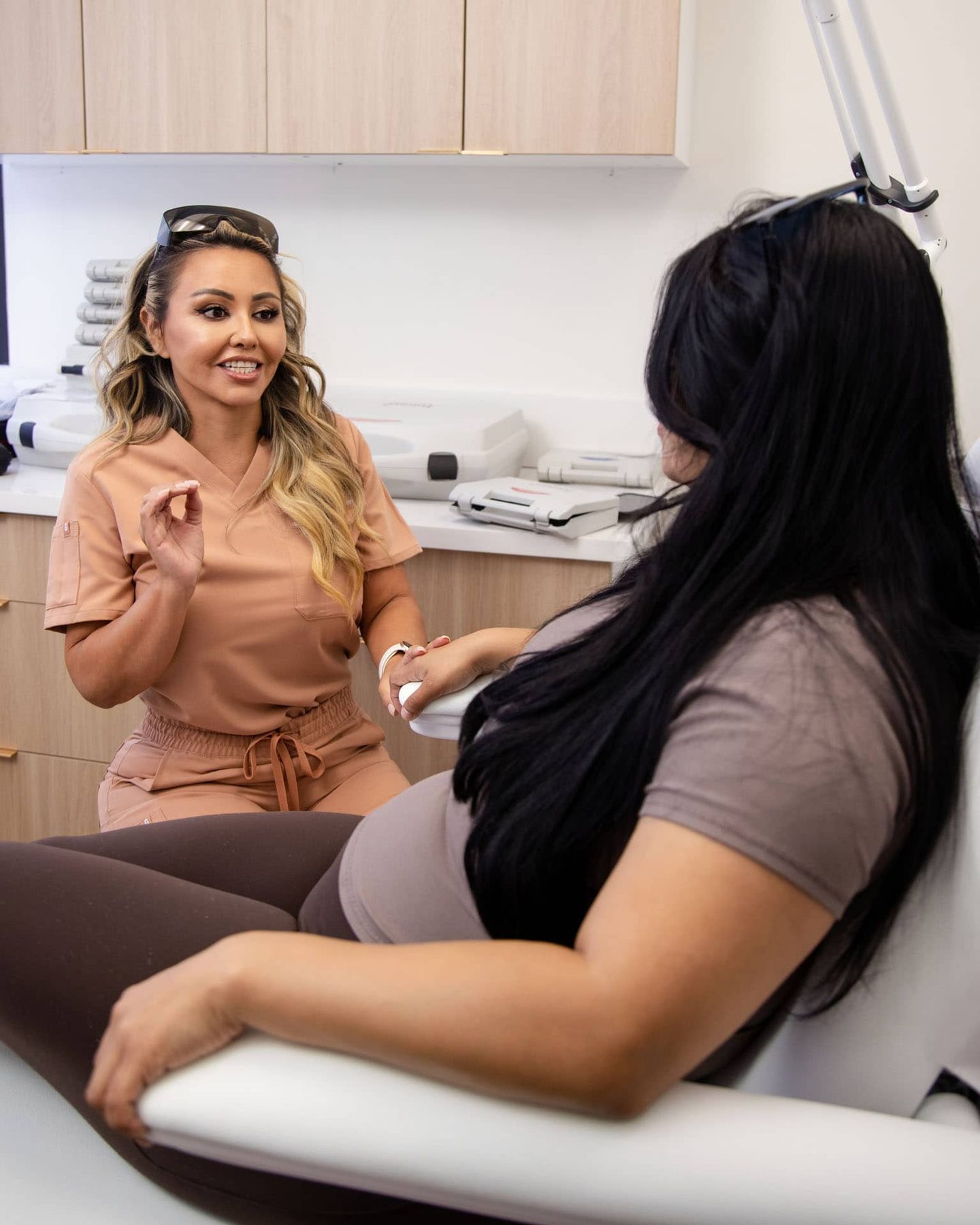
Patients often want the practical version, not the marketing version. A TimeWalker session is usually well tolerated, but it is still a laser treatment. Sensations vary by step. The intraoral portion can feel unusual at first because the applicator works inside the mouth, though it is not typically described as painful. External passes may feel warm, prickly, or briefly intense depending on the settings and the patient’s sensitivity.
A skilled provider adjusts based on skin thickness, treatment goals, and tolerance. Someone treating early laxity in a younger patient will not necessarily use the same intensity as someone addressing more established textural change and lower-face aging in a patient twenty years older. That judgment matters. More energy is not always better. Enough heat to stimulate renewal is useful. Too much for the wrong patient can create unnecessary downtime or irritation without meaningfully improving the result.
Most sessions are completed within about 45 minutes to a little over an hour, depending on the plan and whether the neck or other areas are included. Numbing may or may not be used depending on the treatment details. Patients usually leave with some redness, warmth, and a sensation similar to mild sun exposure. The skin may feel dry or slightly rough for a few days afterward, particularly if a resurfacing component was part of the session.
The benefit of working at multiple depths
Single-focus treatments can be effective, but they also have limits. If a device mainly treats pigment and surface irregularity, skin may look brighter without looking firmer. If a device mainly heats deeper tissue, the skin may feel tighter but still show dullness or uneven texture. The reason clinicians often value the TimeWalker concept is that it does not force those choices into separate silos.
The internal tightening phase can support the lower face and the area around the mouth. The fractional or resurfacing phase can help soften roughness and improve reflectivity, which is part of what people describe as glow. The deeper dermal heating can contribute to gradual firmness.
Patients often notice that their skin looks “rested” before they can identify exactly why. That tends to happen when a treatment affects both structure and surface. It is the difference between simply smoothing the top layer and creating a broader improvement in how the skin reflects light and holds itself.
Who tends to be a strong candidate
The best candidates are often men and women with mild to moderate signs of facial aging who want improvement without surgery and without a long social recovery. They may be bothered by fine lines, crepey texture, enlarged pores, early jowling, or a lack of skin vitality. Many are already using quality skincare and realize they have reached the point where topicals alone are no longer enough.
It can also appeal to patients who are cautious about injectables or who want to complement them rather than rely on them entirely. A face can be volumized with filler and still look texturally tired. It can be softened with neuromodulators and still show laxity around the mouth. Laser-based skin renewal fills a different role.
That said, not everyone is an ideal candidate at every moment. Very inflamed skin, an impaired skin barrier, active infection, or a recent tan can affect timing. Melasma-prone patients need careful assessment because heat-based treatments can sometimes aggravate pigment in susceptible individuals. People hoping for a surgical-level lift may be disappointed if they choose laser treatment instead of a procedure that better matches the degree of laxity.
This is where honest consultation matters. Good aesthetic planning is often about matching the tool to the problem rather than trying to make one device do everything.
What kind of results are realistic
The strongest results are usually described in terms of quality. Skin may look smoother, tighter, brighter, and more even. Fine lines can soften. Pores may appear less obvious. The lower face can look a bit firmer. Makeup may sit better. Patients frequently report that they look fresher without looking altered.
Results are not always immediate in the way a filler result is immediate. There can be an early glow and some visible tightening from tissue response, but collagen remodeling takes time. In most cases, skin continues to evolve over several weeks and often over a few months. That delayed improvement is normal and worth setting expectations around from the start.
People also vary in how much they improve from one session. Age, sun history, skin thickness, genetics, hormonal factors, smoking history, and home skincare all influence response. A patient in their late thirties with early texture change may respond differently from a patient in their sixties with deeper etched lines and more significant laxity.
For that reason, many practices recommend a series rather than a one-and-done mindset. Not everyone needs multiple sessions immediately, but repeated collagen stimulation often produces a more satisfying and more durable outcome than a single treatment spaced far apart.
Downtime, social recovery, and the reality of busy schedules
One reason the Fotona 4D Laser Facial TimeWalker Encino, CA search has become common is simple logistics. Many patients want meaningful rejuvenation, but they cannot disappear for two weeks. They have work meetings, school pickups, social events, and professional visibility.
TimeWalker generally sits in a useful middle range. It is more substantial than a standard facial and often more dynamic than very light no-downtime treatments, but it usually does not carry the extended crusting or peeling associated with more aggressive ablative procedures. Redness may last from several hours to a couple of days, depending on treatment intensity and skin sensitivity. Dryness and a sandpapery feel can show up briefly as the skin renews. Most patients can resume routine activity quickly, though strict sun avoidance and smart skincare are important afterward.
This does not mean there is zero recovery. That phrase sets patients up badly. The better expectation is low to moderate downtime with visible but temporary post-treatment changes. For many working adults in Encino, that is a manageable trade.
How it compares with other common options
Patients often ask how TimeWalker differs from microneedling, RF treatments, or stronger resurfacing lasers. The answer depends on the concern being treated.
Microneedling can be excellent for texture and mild scar remodeling, especially when done in a thoughtful series. RF microneedling adds heat and can do more for tightening in some patients. Traditional ablative lasers can create more dramatic resurfacing, but they typically come with more downtime and a narrower margin for error. Broad light-based treatments can help pigment and redness but may not address laxity in the same way.
TimeWalker occupies a useful space because it combines internal and external rejuvenation with a recovery profile that many patients find acceptable. It is not necessarily the strongest option for every single problem, and a responsible provider should say so. Very deep wrinkles may need a different resurfacing strategy. Pronounced skin laxity may require surgery for a truly transformative change. But for global facial rejuvenation in the patient who wants noticeable improvement without crossing into aggressive downtime, it can be a smart fit.
The role of provider technique
Devices matter. Technique matters more.
Two patients can receive treatment on the same platform and have very different outcomes because planning, settings, overlap, patient selection, and aftercare were different. This is especially true for combination laser treatments. The provider needs to understand not only how to operate the device, but how to read skin, pace energy delivery, and avoid over-treating vulnerable areas.
Around the mouth, for example, the tissue can be rewarding to treat but also easy to irritate if the approach is too aggressive. Cheek skin may tolerate one strategy while the neck requires more caution. A patient with a history of post-inflammatory hyperpigmentation needs a different level of conservatism than someone who has never pigment-shifted after treatment.
This is why consultation should feel specific. If the conversation is generic, the treatment plan may be too.
What supports better results after treatment
The post-treatment period does not need to be complicated, but it should be deliberate. Skin is in repair mode, and how patients handle the first several days matters. The basics are simple:
- Keep the skin hydrated and avoid harsh actives until the provider says they can be resumed.
- Use sunscreen diligently and limit direct sun exposure, especially in the first week or two.
- Avoid picking, scrubbing, or trying to accelerate flaking.
- Follow the clinic’s instructions on cleansing, moisturizers, and makeup timing.
- Report unusual swelling, blistering, or persistent irritation promptly.
Patients sometimes undermine an otherwise good treatment by returning too quickly to exfoliating acids, retinoids, hot yoga, or direct heat exposure. In Encino, this comes up often because people are active and outdoors. A few careful days can protect weeks of collagen-building progress.
Pairing TimeWalker with skincare and other treatments
Laser treatment tends to work best as part of a broader skin health plan. That does not mean an elaborate twelve-step routine. It means the basics are in place. Daily sunscreen, a cleanser that does not strip the barrier, a moisturizer suited to the skin type, and a few evidence-based actives such as retinoids, vitamin C, or pigment-regulating ingredients when appropriate can help preserve gains.
Some patients also combine TimeWalker with injectables, peels, or other collagen-stimulating treatments, but timing matters. Thoughtful sequencing can improve results. Poor sequencing can increase irritation or blur what is actually helping. In clinical practice, the strongest long-term outcomes usually come from restraint and consistency rather than stacking every available procedure into one month.
One common example is the patient who has some volume loss in the midface but also rough texture and lip lines. If filler is used alone, the face may regain contour but still look aged because the skin quality has not improved. If laser is used alone, the skin may glow but still lack structural support where it has truly thinned. Combining approaches, when done judiciously, often produces the most believable result.
The less glamorous truth: maintenance matters
No energy-based treatment stops time. That does not make it less worthwhile. It just means expectations should be grounded. Skin keeps aging. Sun exposure continues. Collagen naturally changes year by year. Most patients who are happy with their TimeWalker results maintain them with periodic treatments, good skincare, and realistic lifestyle habits.
That maintenance rhythm does not need to be excessive. Some people do well with a short series and then occasional upkeep. Others prefer one or two treatments a year built around work and social calendars. The right interval depends on age, goals, sun habits, and how aggressively the skin was treated.
The patient who benefits most is usually not the one chasing perfection. It is the one investing steadily in skin quality over time.
Why this treatment resonates with the modern aesthetic mindset
There has been a noticeable shift in what many patients want from cosmetic care. Years ago, conversations centered more on fixing a line or filling a fold. Now, many people are asking for something subtler. They want their skin to look healthy, even, and resilient. They want colleagues to think they look well rested, not wonder what they had done.
TimeWalker aligns with that preference because it targets the skin as a living structure, not just a series of isolated flaws. It supports renewal instead of trying to camouflage every sign of age. In a place like Encino, where patients often want polished results that still feel like themselves, that philosophy makes sense.
For the right candidate, the Fotona 4D Laser Facial in Encino, CA can be a strong option for improving texture, supporting collagen, and creating a fresher overall appearance with a reasonable recovery period. The value is not just in the technology. It is in how the treatment respects the layered nature of facial aging and meets patients where many of them actually are, not ready for surgery, past the point of relying on facials, and looking for a method that can restore skin quality in a way that looks natural in daylight.
OMNIA Wellness Center
16430 Ventura Blvd Ste 207, Encino, CA 91436
Phone: +1 818-386-8511
FAQ About Fotona 4D Laser Facial (TimeWalker) Encino, CA
What is a Fotona laser good for?
Fotona lasers support several different aesthetic protocols. The Fotona 4D facial uses two wavelengths and four treatment modes to address concerns such as fine lines, skin texture, and mild laxity. OMNIA Wellness Center offers the TimeWalker facial with an individual consultation. Suitability and likely improvement depend on the person's skin and goals; results are not guaranteed, and this treatment does not reproduce a surgical facelift.
How much does a Fotona laser treatment cost?
The cost depends on the treatment protocol, areas treated, number of sessions, and provider's assessment. Ask OMNIA Wellness Center for a current written quote that explains what is included, whether follow-up is included, and any proposed package terms. An individualized estimate is more useful than assuming that one advertised price applies to every facial treatment.
How much downtime is there after a Fotona laser procedure?
Recovery varies with the specific protocol and intensity. Fotona describes its 4D facial as having little to no downtime, but temporary redness or sensitivity can occur, and a stronger surface treatment can require more recovery. Ask the treating clinician what to expect from the planned settings, how to care for the skin afterward, and when to contact the clinic with concerns.